We Asked Our Fair Directors: What Makes A Successful Booth?
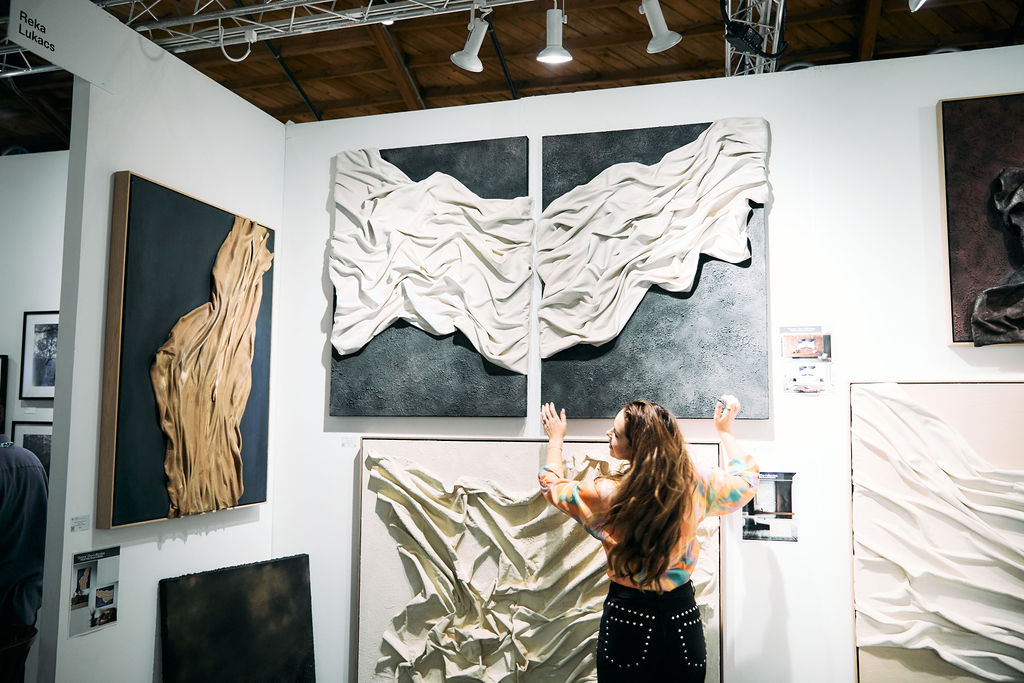
Every artist brings something different to the Fair, but the booths that leave a lasting impression often share a few things in common. They tell a clear story, create opportunities for connection, and give visitors a meaningful way to engage with the work. Whether you’re exhibiting for the first time or returning for another edition, we asked members of our team to share their top tips for creating a successful booth. Below, insights from Nicole Garton (Global Fair Director), Briana Salatino (Senior Fair Manager), and Hannah Grout (Senior Fair Manager) offer guidance on everything from booth design and pricing to collector engagement.
1. Less Really Is More
One of the most common challenges artists face is deciding how much work to bring. While it can be tempting to fill every available wall, a carefully edited booth often has a much bigger impact. “A common mistake artists make is overcrowding the booth,” says Briana. “More work does not equal more sales. Editing is everything.”
Giving your work room to breathe allows visitors to engage with each piece individually and creates a more intentional viewing experience. Rather than filling every available inch of wall space, focus on presenting a strong selection of your best work.
As Nicole explains, blank space can be your friend. A thoughtful display with clear visual breathing room helps collectors focus on the work itself.
2. Tell a Clear Visual Story
A successful booth isn’t necessarily one where every piece looks identical, but it should feel connected. “A cohesive presentation is a strong one,” says Hannah. “A stand with a clear story and message stands out, giving you a way to communicate visually with an attendee before they engage with you verbally.”
Briana agrees, noting that cohesion comes from a recognizable point of view rather than repetition. “A collector should sense a consistency across your work before they even read your name.” Whether that’s through color palette, subject matter, materials, or concept, the goal is to create a booth where the work feels like it’s in conversation with itself.
3. Your Presence Matters More Than You Think
The artwork may stop visitors in their tracks, but the artist often determines whether a conversation turns into a sale. “The biggest separator between a successful booth and an average one is usually the artist’s presence and energy,” says Briana. “Collectors buy relationships as much as they buy work.”
Being approachable, making eye contact, and welcoming visitors into conversation can go a long way. Try asking simple questions:
- What drew you to this piece?
- Do you have a favorite?
- Are you collecting for a particular space?
Think of yourself less as a salesperson and more as a guide helping visitors discover your work.
4. Make Your Work Accessible at Different Price Points
A diverse range of prices creates opportunities for different types of buyers to engage with your work. A booth with only high-priced works leaves buyers with smaller budgets with nowhere to go.
Smaller originals, studies, works on paper, and limited-edition prints can serve as an accessible entry point for first-time collectors while still complementing larger pieces in your collection.
Nicole also recommends displaying prices clearly throughout your booth. Removing uncertainty makes it easier for visitors to engage and can help start conversations naturally.
5. Prepare Before You Arrive
The artists who seem the most relaxed during setup are often the ones who prepared long before load-in day.
“Mentally install your booth before you arrive,” says Briana. “Sketch a layout, know your wall dimensions, and have a plan so setup isn’t improvised and stressful.”
Hannah echoes the importance of organization, recommending that artists finalize pricing, booth plans, and presentation details before arriving onsite.
It’s also worth preparing a short, natural answer to the question you’ll hear most often throughout the Fair: “Tell me about your work.”
Having a concise story ready can help conversations flow more naturally and confidently.
6. Remember That Success Isn’t Only Measured in Sales
While selling artwork is often a primary goal, some of the most valuable outcomes happen after the Fair ends. Collectors may need time to make a decision. Curators may return later in the weekend. New followers, future commissions, and lasting collector relationships often begin with a simple conversation.
That’s why the team recommends collecting contact information whenever possible and following up after the event. Many of the most valuable connections made at the Fair continue long after the event ends, even if they don’t result in an immediate sale.
Final Thoughts
At its core, a successful booth isn’t about having the largest display or the most artwork on the walls. It’s about presenting a thoughtful collection, creating an inviting experience, and sharing the story behind your work with confidence.
Every artist approaches the Fair differently, but the most memorable booths tend to have one thing in common: they feel authentic to the artist behind them.
When you focus on creating genuine connections, the rest often follows.